ELECTROMEDIA
Revolutionary Equipment
For
Airborne
Risk Reduction
Recently, there have been many discoveries to the medical community with regard to RISK MANAGEMENT. The concern, of course, is due to the increase of many pathogens, formerly controlled, that have returned with a vengeance. Mycobacterium TB heads the list of infectious disease we must contain.
There have been estimates about the extent of the TB threat and some have ranged as high as affecting over 30 million people throughout the world by the year 2000 if we do nothing.
It’s All About Clean Air and FSI – Clean Air have made a commitment to the medical industry. We will provide the most effective and technically advanced Air Cleaning Equipment to the medical industry. Let us look at some of the challenges you, as healthcare workers, face in your daily work that effective Air Cleaning Equipment can remedy.
TOXIC GASES INFECTIOUS DISEASE ODORS
Just how can cleaning the air help you with these and other challenges?
To understand the answer to this question, we must consider the main elements of effective air cleaning. There are four main aspects to consider, two which we can address and two over which we have no control. These are as follows:
1. The cubic foot amount of air passed through the system per minute.
2. The efficiency of the filtration system at top cfm measured in percentages according to the DoP testing procedures with .3 micron size particulate.
3. The type and amount of contaminate generated.
4. The quantity and quality of the make up air.
Take a look at the most commonly recommended type filtration
in the medical industry today, the HEPA filter.
High Efficiency Particulate Arrestor filters can have a DoP rating as
low as 95% even though, to have a certified label and to meet the CDC
guidelines, the HEPA is required to perform at a 99.97%
efficiency. In the most recent FEDERAL
REGISTER,
How do the ELECTROMEDIA and 99.97% HEPA filtration compare?
As shown in the table below, the two types of filtration both start with a 99.97% DoP rating but the ELECTROMEDIA has over twice the effectiveness as that of a comparably sized HEPA due to the much greater air flow rate (SCFM).
|
At .3 Micron DoP Test |
Lab Measured
Collection Efficiency |
Air Flow Rate
(SCFM) |
Total Air Cleaning
Effectiveness Factor |
|
ElectroMed |
99.97+% |
1050 |
1049 |
|
HEPA |
99.97% |
450 |
450 |
|
The test method used to rate High Efficiency Filters is the tough DoP Military Standard 282. Using this test method, ElectroMedia has been proven over 99.97% efficient at collecting particles down to .3 microns and is highly effective for even smaller particles. |
|||
What are we trying to achieve with RISK MANAGEMENT?
Are we not looking to contain and/or destroy pathogens to reduce, if not eliminate, nosocomial transmission of disease? This is especially true in patient isolation rooms and certain others such as sputum induction and bronchoscopy rooms. Are not the emergency waiting, emergency treatment, radiology, and lobbies just as important?
The options we currently have to reduce risk are as follows:
I. Prevention by early detection and treatment.
A. Screening patients.
B. Providing rapid diagnostics.
C. Prescribing appropriate and preventative therapy.
II. Application of source control methods to prevent spread into general air circulation.
A. Using physical measures to reduce microbial contamination of air.
B. Providing isolation rooms, negative pressure rooms which is required and can be very costly.
III. Reduction of the number of bacterium in the air.
A. Dilution through established A.E.R. in which clean outside air is mixed with recirculated air from within the environment.
B. Most areas call for 2-6 changes per hour, with 20% being outside air with some areas requiring as many as 15 changes per hour.
C. Mixing for specialized areas best accomplished when air is brought in from the ceiling and exhausted at the floor. (Coanda air pattern)
D. Intakes must be as far from any possible entrainment of contaminates as possible (at least 25 feet).
E. Exhaust outlets have a terminal velocity of 4,000 f/m to ensure exhaust will rise in winds of up to 40 mph.
The use of ELECTROMEDIA will help you attain many of these desired results in a cost effective manner. The number of bacterium are not only reduced but many are destroyed making this method safer than dilution and exhausting. With a highly efficient blower motor we can quietly generate up to 1050 cfm to provide as many as 20 air changes per hour in a room 20w x 15l x 10h without any danger of bringing contaminated air in through fresh air ducts.
COANDA AIR FLOW PATTERN BY ELECTROMEDIA
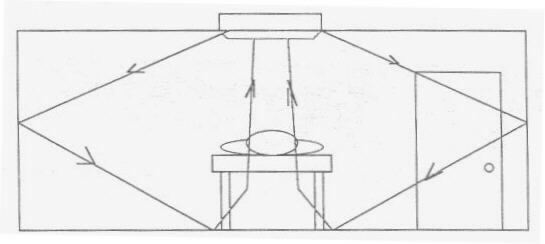
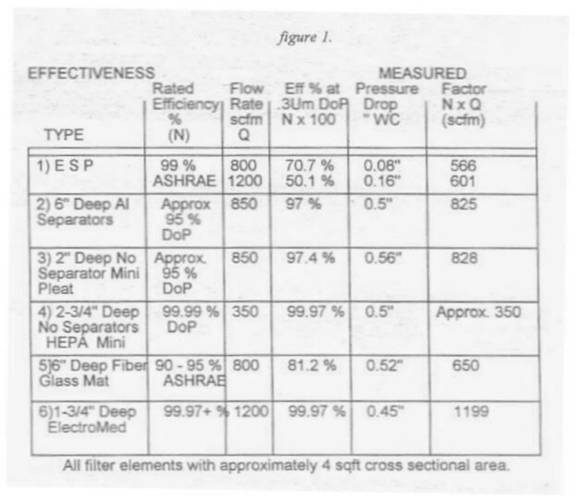
- Initial tested during the developmental stages show ELECTROMEDIA to be the most efficient air system available. (figure 1.)
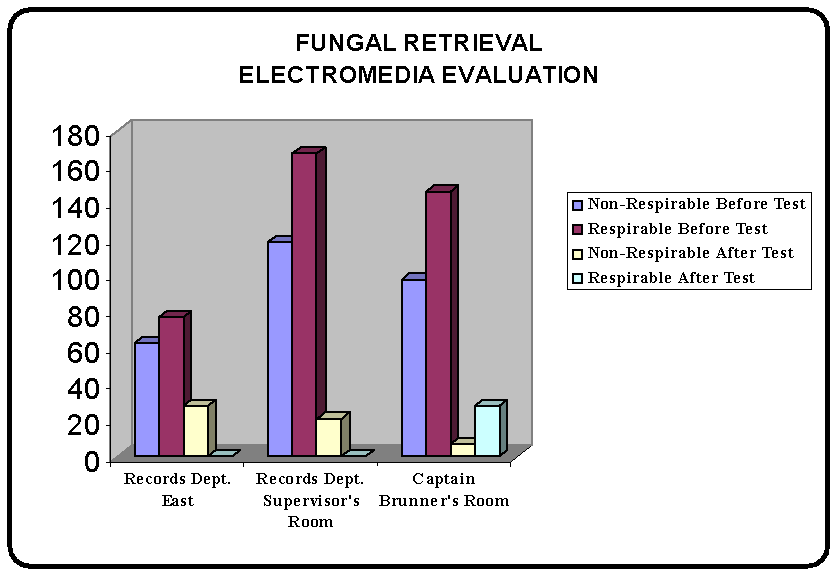
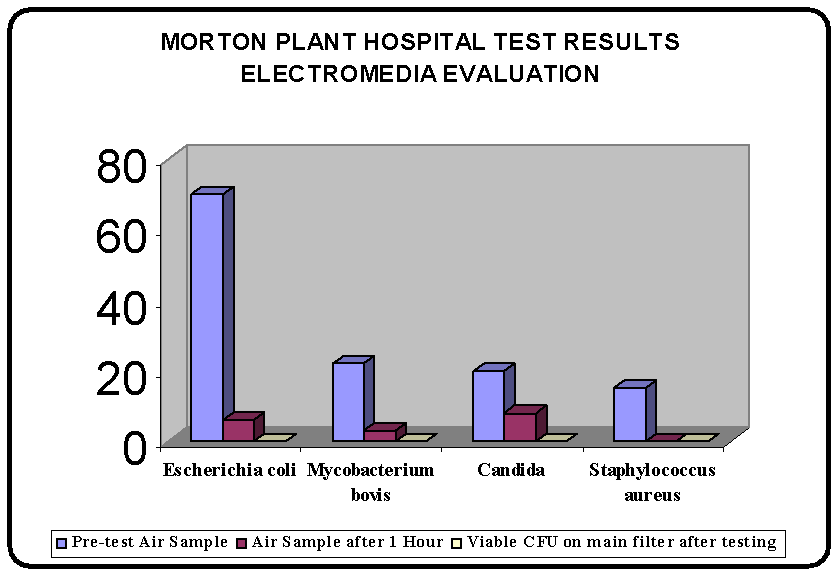
- Test results by Dr. Elliot Dick not only prove the containment ability of ELECTROMEDIA but they show that certain bacteria are also destroyed. (figure 2.)
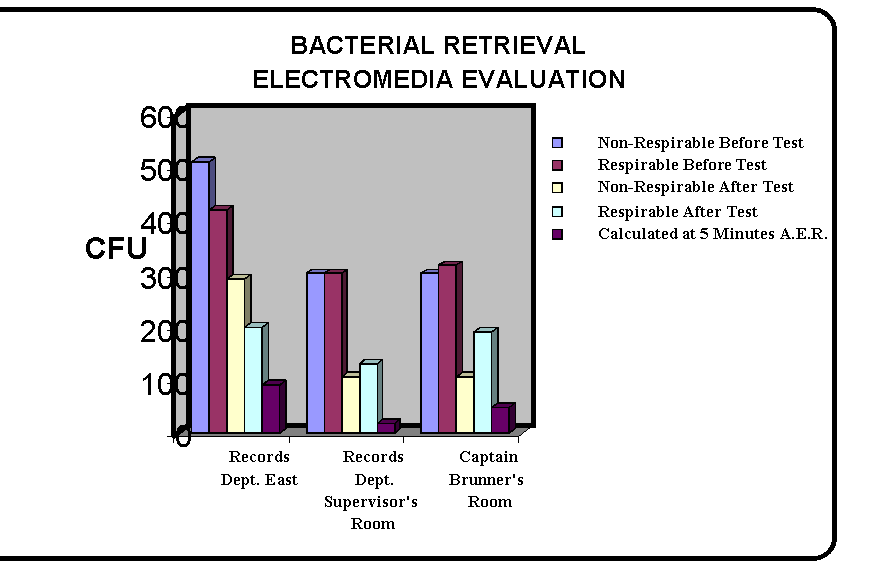
- Tests at the Pinellas County Jail show the containment ability of ELECTROMEDIA even at a 9.5 minute A.E.R. (figure 3.)
- Tests
at